
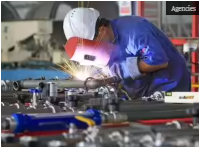

As India’s Union Budget 2026-27 approaches (to be presented by Finance Minister Nirmala Sitharaman on February 1, 2026), Indian industry stakeholders have underscored strengthening the ‘Make in India’ initiative and boosting domestic manufacturing as their top priority. A pre-Budget survey by the Associated Chambers of Commerce and Industry of India (ASSOCHAM) found that most respondents want the Budget to focus on policies that scale up manufacturing and support growth across sectors.
Industry’s Key Expectations
- Boost Domestic Manufacturing: A majority of industry players consider expanding local production and the Make in India programme essential for achieving an Aatmanirbhar (self-reliant) and Viksit Bharat (developed India) vision.
- Simplify Compliance & Tax Rules: High regulatory burdens, complex compliance processes and tax structures are seen as major constraints. Businesses want easier tax compliance, simplified TDS/TCS norms, and a more predictable regulatory environment.
- Infrastructure, Logistics & Costs: Elevated logistics and energy costs are cited as barriers to competitiveness. Industry hopes for Budget measures addressing infrastructure gaps and lowering cost burdens across value chains.
- Access to Capital: Limited long-term funding and credit availability are key hurdles to scaling manufacturing. Firms are urging targeted policies to provide cheaper capital, broader credit access, and incentives for technology upgrades.
- Support for Technology & Innovation: There’s a strong call for tax incentives linked to Industry 4.0 adoption, automation and AI integration, and expansion of Production Linked Incentive (PLI) schemes to more sectors.
Execution Challenges Highlighted
While many government initiatives such as GST 2.0 reforms, infrastructure capital expenditure and PLI schemes are viewed positively, a significant portion of respondents said the on-ground impact has been limited or moderate, pointing to gaps in execution, design and accessibility of existing policies. This underscores industry concern that without stronger implementation measures, the Budget’s reform agenda may not fully translate into real-world growth benefits.
Outlook Ahead of the Budget
With over half of surveyed professionals remaining optimistic about the business outlook, there is cautious confidence that Budget 2026 can drive meaningful change — if it addresses bottlenecks on execution, compliance, finance and infrastructure. These reforms are seen as critical not just for manufacturing but also for energising MSMEs, job creation, and unlocking private investment across the economy.


Leave A Comment