

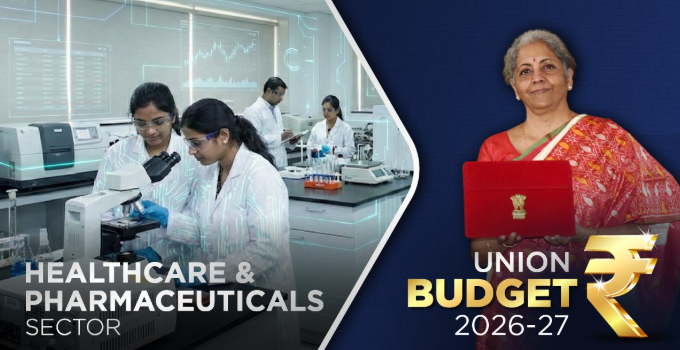
The Union Budget 2026–27, presented by Finance Minister Nirmala Sitharaman, gave significant emphasis to strengthening India’s healthcare and pharmaceutical sectors, signalling a strategic shift toward building robust medical infrastructure, boosting manufacturing, and expanding research and training.
Healthcare and pharmaceuticals have emerged as key priorities not just for public well-being but also for economic growth. With rising demand driven by an ageing population, increased health awareness, broader insurance coverage, and urbanisation, the sector is being positioned as a growth engine that supports employment, drives exports, and enhances long-term productivity.
Key Healthcare and Pharma Announcements in Budget 2026
► Biopharma Shakti Initiative:
Finance Minister Sitharaman launched the Biopharma Shakti programme with a significant ₹10,000 crore outlay over five years. The goal is to transform India into a global biopharma manufacturing hub by strengthening domestic production of biologics and biosimilars and boosting advanced pharmaceutical research and innovation.
► Nationwide Clinical Trial Network:
A network of 1,000 accredited clinical trial sites will be established across the country to accelerate drug development, improve patient access to cutting-edge therapies, and make India a preferred destination for clinical research.
► Regional Medical Hubs:
The government announced support for states in setting up five integrated regional medical hubs — health complexes combining medical services, research, and education to improve access and quality of advanced care.
► Traditional Medicine and Allied Health:
Budget 2026 proposed setting up three new All India Institutes of Ayurveda, upgrading Ayush pharmacies and drug testing labs, and strengthening the WHO Global Centre for Traditional Medicine at Jamnagar. These measures aim to enhance traditional and complementary medicine alongside modern healthcare.
► Mental Health and Veterinary Services:
The budget included plans to expand mental health infrastructure — including NIMHANS 2.0 — and initiatives to train veterinary and para-veterinary professionals, boosting services in animal health and associated diagnostics.
► Allied Health Workforce Expansion:
The government will expand allied health professional education and training, adding new institutions and programmes to strengthen the workforce for diagnostics, rehabilitation, and specialized care.
Overall, the Budget’s healthcare strategy blends manufacturing strength, research capacity, clinical infrastructure, and workforce development — aiming to improve both health outcomes and India’s competitiveness in the global pharmaceutical and medical ecosystem.