
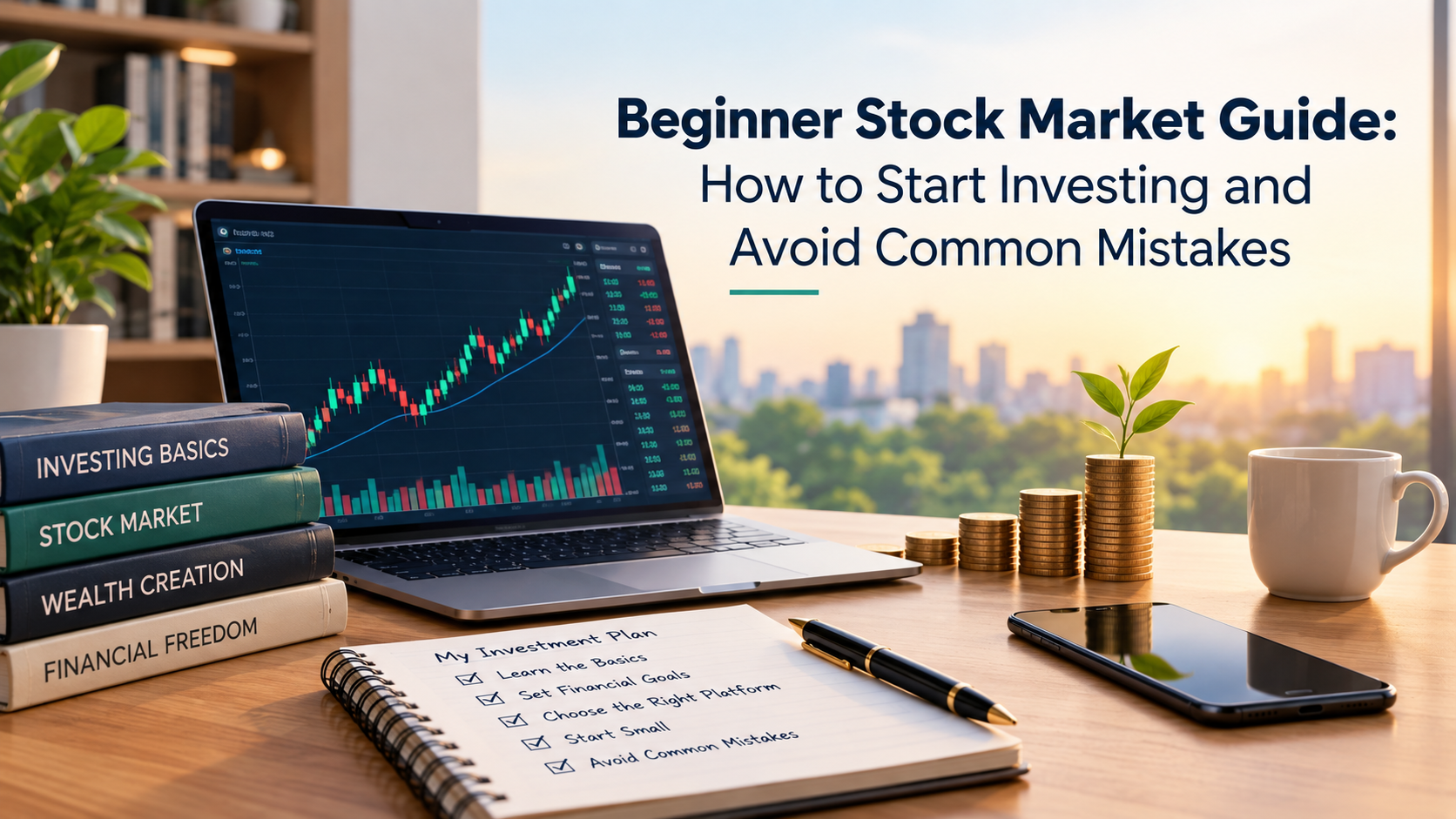

Starting your investment journey can feel overwhelming, especially when financial news, market movements, and investment terms seem complicated. A clear understanding of the basics can help beginners make informed decisions and build a disciplined approach toward investing. This Beginner Stock Market Guide explains how new investors can get started, understand market information, and avoid common mistakes while exploring the Indian financial markets.
Understand How the Indian Stock Market Works
Before making an investment, beginners should understand how the market functions. Stock Market India provides opportunities for individuals to participate in the growth of listed companies and other financial instruments. However, market prices can move because of economic conditions, corporate developments, interest rates, global trends, investor sentiment, and other factors.
New investors should first learn essential concepts such as market indices, trading sessions, investment horizons, diversification, risk, returns, and volatility. Understanding these fundamentals can create a stronger foundation for responsible stock market investment.
Check Market Updates Before Making Decisions
Keeping track of market developments is an important part of becoming an informed investor. Searching for Indian Share Market Today can help investors understand the broader market environment, while Stock Market Today India updates can provide information about current trends, market movements, and major economic developments.
Investors may also follow Live Share Market India updates to monitor market activity during trading hours. However, beginners should avoid making investment decisions simply because prices are moving quickly. Short-term market fluctuations do not necessarily indicate the long-term potential of an investment.
Instead of reacting emotionally to every movement, investors can focus on their financial objectives, investment timeframe, and individual risk tolerance.
Start With Clear Financial Goals
One of the most important steps before investing is identifying why you are investing. Goals may include building long-term wealth, preparing for future expenses, creating an additional financial resource, or achieving specific financial milestones.
A beginner should determine how much money can be invested regularly without affecting essential expenses or emergency savings. Starting with an amount that fits comfortably within the personal budget can help develop consistency without creating unnecessary financial pressure.
Avoid Investing Based on Emotions
Fear and excitement can strongly influence investment decisions. When markets rise rapidly, beginners may feel pressured to invest because they fear missing an opportunity. Similarly, falling markets can create panic and encourage investors to make rushed decisions.
Successful investing requires discipline. Rather than following market excitement or making decisions based solely on social media discussions, beginners should research financial information and understand the risks associated with their decisions.
Diversification Can Help Manage Risk
Putting all available money into one investment or one type of asset can increase exposure to specific risks. Diversification involves spreading investments across different assets or categories according to an individual’s financial goals and risk tolerance.
Diversification does not eliminate market risk, but it can help reduce the impact that poor performance in one area may have on an overall portfolio.
Do Not Rely Entirely on Market Predictions
Searches for Stock Market Prediction India are common among investors looking for possible future market trends. However, market predictions are inherently uncertain. Economic developments, policy changes, global events, interest rates, inflation, and investor sentiment can affect market conditions in unexpected ways.
Beginners should therefore treat predictions as information to study rather than guarantees of future performance. A well-planned investment strategy should not depend entirely on short-term forecasts.
Common Mistakes Beginners Should Avoid
New investors can improve their investing habits by avoiding several common mistakes:
- Investing without understanding the risks involved.
- Following market rumours or unverified information.
- Making decisions based purely on short-term price movements.
- Investing money needed for essential expenses.
- Ignoring diversification and risk management.
- Expecting guaranteed or extremely high returns.
- Constantly changing an investment strategy because of market volatility.
- Failing to review personal financial goals periodically.
Build Knowledge Before Building a Portfolio
A strong investment journey begins with education. Beginners should learn how financial markets work, understand different investment options, compare risks, and keep up with reliable financial information.
Money Times can help readers stay informed about financial markets, investment trends, and economic developments. Following reliable updates while maintaining a long-term and disciplined approach can help beginners develop better financial awareness.
The key lesson of this Beginner Stock Market Guide is that investing is not about reacting to every market movement. It is about understanding your objectives, managing risk, continuing to learn, and making decisions based on reliable information. With patience and financial discipline, beginners can develop a more structured approach to stock market investment in India.
Note: This article is for educational and informational purposes only and should not be considered investment, financial, or legal advice. Investors should evaluate their own financial circumstances and risk tolerance and consider consulting a qualified financial professional before making investment decisions.
Click here to know more about “Share Market Tips Today: Practical Strategies for Smarter Trading Decisions.“


Leave A Comment