
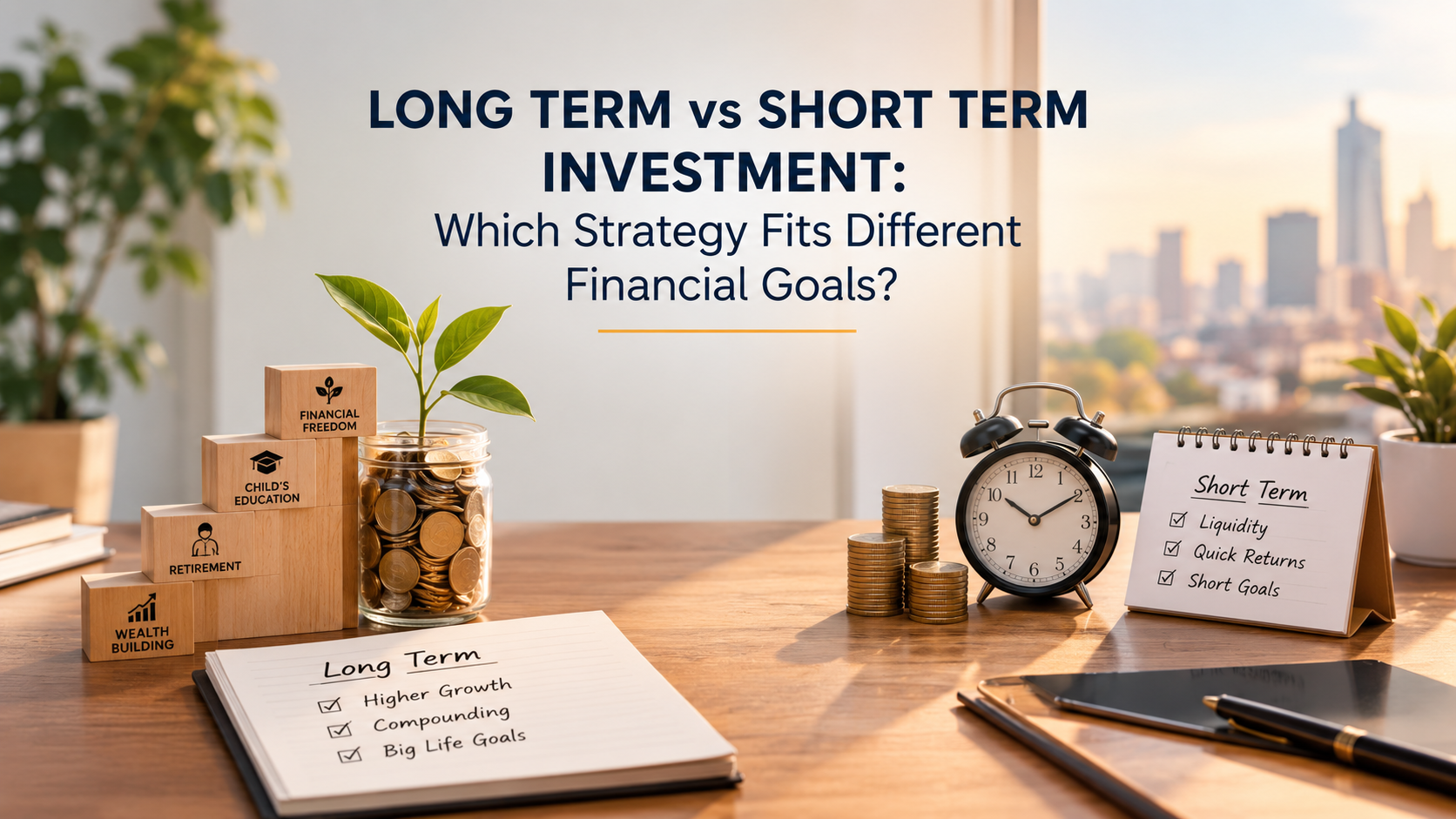

Choosing between long-term and short-term investment depends largely on your financial goals, risk tolerance, investment horizon, and liquidity requirements. While long-term investing focuses on building wealth gradually over several years, short-term investing generally aims to meet financial objectives within a shorter period. Understanding the differences can help investors make informed decisions based on their individual circumstances.
For investors in India, the choice can also depend on market conditions, economic trends, and changing investment opportunities. Whether you are exploring stock market investment, mutual funds, or other financial instruments, having a clear strategy is essential.
What Is Long-Term Investment?
Long-term investment typically involves staying invested for several years or more. The objective is generally to benefit from the potential growth of investments over time while allowing temporary market fluctuations to play out.
Investors planning for goals such as retirement, children’s education, buying a home, or creating long-term wealth may consider a longer investment horizon. Time can also allow the power of compounding to contribute to portfolio growth.
When researching the Best Stocks for Long Term, investors should focus on factors such as business fundamentals, financial performance, industry outlook, valuation, and their own risk tolerance rather than making decisions based solely on short-term market movements.
Long-term investors may also consider Mutual Fund Investment India options depending on their financial goals. Mutual funds can provide diversification across different securities and asset classes, although returns are market-linked and not guaranteed.
What Is Short-Term Investment?
Short-term investment generally focuses on financial goals that may arise within a few months to a few years. Investors choosing this approach may place greater emphasis on liquidity, capital preservation, and market conditions.
Short-term strategies can be suitable for objectives such as creating funds for an upcoming expense, managing temporary surplus cash, or pursuing opportunities based on market movements. However, shorter investment horizons can provide less time to recover from market volatility.
Investors interested in short-term opportunities should understand that stock market investment involves market risk. Prices can move rapidly because of economic developments, corporate performance, interest-rate changes, global events, and investor sentiment.
Long Term vs Short Term Investment: Key Differences
The primary difference between the two approaches is the investment horizon. Long-term investing generally provides more time for investments to potentially grow and recover from temporary market declines. Short-term investing requires closer attention to liquidity, timing, and changing market conditions.
Risk management is another important consideration. A long-term investor may be better positioned to remain invested during periods of volatility, while a short-term investor may need to respond more quickly to market changes.
Investors should also consider taxation, transaction costs, financial commitments, and the purpose of the money before selecting a strategy.
Which Strategy Fits Different Financial Goals?
Your financial objective should generally guide your investment horizon. For retirement planning or long-term wealth creation, a longer investment period may be considered because the goal is usually several years away.
For medium-term goals, investors may consider a combination of investment options depending on their risk profile and expected time frame. For near-term financial requirements, liquidity and capital preservation can become more important than pursuing higher potential returns.
There is no single strategy that suits every investor. A person saving for retirement may have a very different approach from someone preparing for a major expense within the next year.
How Market Information Can Support Investment Decisions
Staying informed can help investors understand broader market trends and economic developments. Following Sensex Live Updates and Nifty Today News can provide useful information about market movements, although daily market changes should not automatically determine long-term investment decisions.
Investors should look beyond individual market movements and consider factors such as economic conditions, interest rates, inflation, corporate earnings, and their personal financial objectives.
For beginners, learning the basics before investing can be valuable. A Stock Market Course India can help individuals understand concepts such as market indexes, risk management, portfolio diversification, fundamental analysis, technical analysis, and different investment strategies.
Build an Investment Strategy Around Your Goals
Instead of choosing between long-term and short-term investing based purely on market trends, investors should begin with their financial goals. Determine when the money will be required, how much risk you can reasonably accept, and how much liquidity you need.
Diversification can also play an important role in managing investment risk. Depending on individual circumstances, investors may combine different investment avenues rather than relying on a single approach.
Conclusion:
Long-term and short-term investments serve different financial objectives. Long-term investing can focus on wealth creation over an extended period, while short-term strategies may address nearer-term financial requirements and liquidity needs.
For Indian investors, understanding Mutual Fund Investment India, stock market investment, market movements, and financial planning principles can support more informed decisions. Money Times provides financial and market-related information to help readers stay updated and develop a better understanding of investment concepts. Always consider your financial goals, risk tolerance, investment horizon, and professional advice where appropriate before making investment decisions.
Click here to know more about “Beginner Guide to Share Market: How to Start Investing in 2026 Without Making Common Mistakes.“


Leave A Comment