

Indian equity benchmarks witnessed a volatile session with the Sensex ending lower amid broad-based profit booking. Selling pressure in IT, metals and select financial stocks dragged the index despite intermittent buying support in banking counters.

Indian equity benchmarks witnessed a volatile session with the Sensex ending lower amid broad-based profit booking. Selling pressure in IT, metals and select financial stocks dragged the index despite intermittent buying support in banking counters.


In the Union Budget 2026–27, the Indian government has set a significantly higher target of ₹80,000 crore to be raised through disinvestment and asset monetisation under miscellaneous capital receipts, marking a major policy thrust on non-tax revenue sources.

India’s Union Budget 2026–27, presented by Finance Minister Nirmala Sitharaman, drew a wide range of responses from political leaders, industry experts, and market participants — with reactions reflecting both optimism and criticism.
Following the Budget announcement, several market and economic experts weighed in on its key measures:
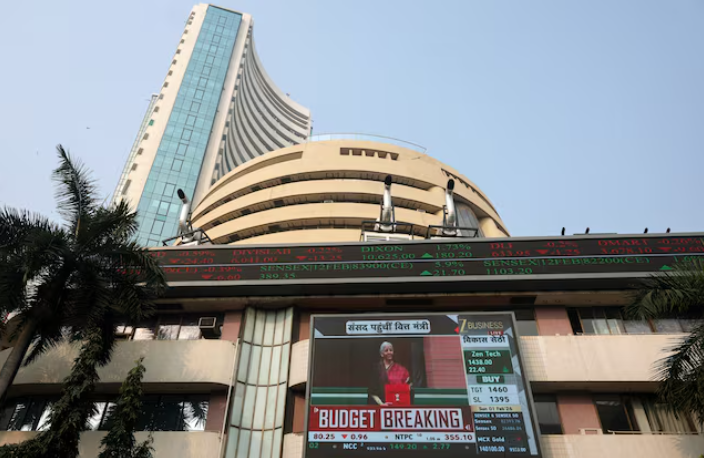
Indian stock markets were expected to open higher on Sunday ahead of the presentation of the 2026–27 Union Budget by Finance Minister Nirmala Sitharaman, as investors looked for cues on government support for economic growth and export-oriented sectors.
In early trading, GIFT Nifty futures were indicating a positive start, suggesting the NSE Nifty 50 could open above its previous close of 25,320.65. Markets were operating in a special trading session on budget day, while debt and foreign exchange markets remained shut.

India’s federal government has announced a record increase in infrastructure spending, raising the capital expenditure allocation to ₹12.2 trillion ($133.1 billion) for the fiscal year 2026–27, Finance Minister Nirmala Sitharaman said in the Union Budget presented on February 1, 2026. This marks an 11.4% annual rise over previous allocations as the government continues to prioritise infrastructure as a key engine of economic growth.
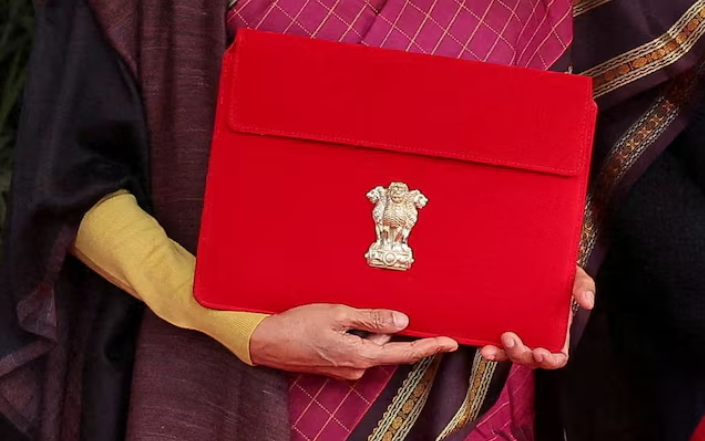
India’s federal government has decided to maintain the share of tax revenue distributed to state governments at 41% for the five-year period from 2026 to 2031, Finance Minister Nirmala Sitharaman announced in the 2026–27 Union Budget presentation in Parliament on February 1, 2026.

Foreign institutional investors (FIIs) have pulled a staggering $23 billion out of Indian equities, with about $19 billion exiting in 2025 and another $4 billion in January 2026, raising alarm bells for Indian markets ahead of the Union Budget 2026. The sharp outflow is driven by a weaker rupee and lower post-tax returns, which make high-valued Indian stocks less attractive compared with safer opportunities in developed markets.
India’s key equity indices have slipped more than 4 percent so far in January, pressured by continued selling from foreign portfolio investors, geopolitical uncertainty and a softer rupee, market experts said.
The sell-off has been compounded by global risk-off sentiment and mixed corporate earnings, prompting investors to shift toward safer assets. Elevated crude oil prices and rising global bond yields also added to domestic market headwinds.
Analysts noted that several heavyweight sectors, including IT and banking, have disappointed in recent earnings, which has put further pressure on benchmarks. The outlook remains cautious as markets navigate external risks and capital flows.

Indian equity benchmarks rallied on Tuesday after a round of better-than-expected quarterly results from key companies, lifting investor sentiment. The Nifty 50 climbed about 0.47 percent to 25,166.70, while the BSE Sensex rose roughly 0.37 percent to 81,844.82, rebounding from recent losses as buying interest broadened across sectors.

Broader markets underperformed benchmark indices, with midcap and smallcap stocks witnessing selling pressure. Investors appeared to book profits after the recent rally in select pockets.
Several stocks across sectors saw sharp intraday corrections, indicating caution at elevated valuations. However, buying interest remained intact in fundamentally strong names.


