
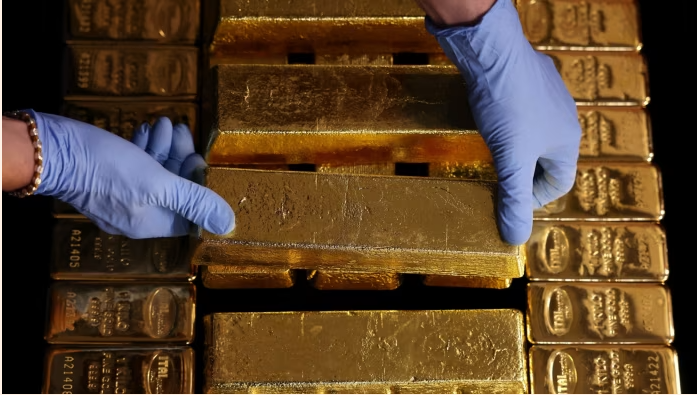

Over the last three years, the price of gold in India has surged by roughly 139% — underlining why the yellow metal remains a powerful store of wealth. As of early December 2025, recent global and domestic developments have renewed discussion on whether gold can continue rising — and what investors should do.
📈 Why Gold Has Gone Up — Key Drivers
- Global uncertainty & safe-haven demand: Gold continues to benefit from macroeconomic uncertainties — inflation pressures, geopolitical tensions, currency volatility and weakening confidence in riskier assets — which push investors toward gold as a refuge.
- Interest-rate dynamics & real yields: With expectations that interest rates (especially in major economies like the U.S.) may ease, gold becomes more attractive — as gold doesn’t yield interest, rate cuts tend to improve its relative appeal.
- Rupee depreciation & domestic demand (in India): As Indian rupee weakens, imported gold becomes costlier, pushing up local gold prices. Coupled with cultural demand (festivals, weddings) and investor appetite for a safety asset, this sustains demand in India.
- Central-bank and institutional demand globally: Many central banks have increased gold reserves recently — a structural driver that supports long-term demand beyond retail buying.
🔮 What Could Happen Next — Outlook & What to Watch
- According to the World Gold Council (WGC), gold could rise another 15–30% in 2026, if factors like lower yields, geopolitical uncertainty and “flight-to-safety” demand turn stronger.
- However, some analysts caution that because gold has already surged strongly, a consolidation or correction is possible — especially if global interest rates stay high, the dollar strengthens, or economic growth remains resilient.
- Thus, timing and context matter: gold may still appreciate in the medium term — but it’s unlikely to be a smooth, straight-line rise. Volatility remains likely.
✔️ What This Means for Investors — Practical Takeaways
- Gold appears to remain a useful hedge — especially against currency weakness, inflation, or global economic instability. It can still serve as a stabiliser in a diversified portfolio.
- Consider a long-term mindset or phased buying — rather than trying to “time” the peak. Buying gold in tranches (e.g. periodically, via SIP-style investments or DRIPs) can help smooth out volatility.
- Don’t put all eggs in gold — Because gold doesn’t yield income and can be volatile in the short term, it’s best used as part of a diversified portfolio (along with equities, bonds, other assets).
- Be aware of local factors if you’re based in India — currency movements, import duties, seasonal demand (festivals/weddings) — all influence domestic gold price; plan purchases accordingly.


Leave A Comment