

The United States’ push to lead in artificial intelligence and advanced military technology has uncovered an unexpected weak spot: both major AI companies and the U.S. military remain heavily dependent on battery technology tied to China. This reliance extends beyond consumer electronics and electric vehicles to critical infrastructure that underpins national security and AI computation.
Battery dependence in AI infrastructure and defense
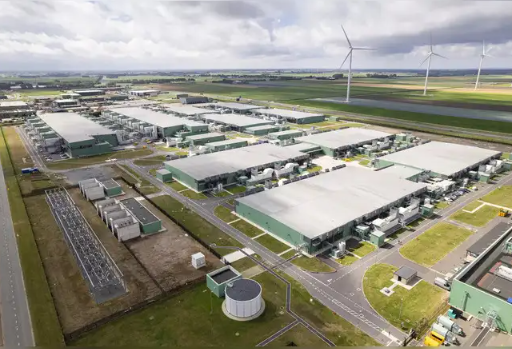
AI data centres, which power large-scale models and cloud services, require vast amounts of electricity and uninterrupted power. To maintain reliability and prevent outages, these facilities increasingly depend on large lithium-ion battery systems, a sector where China holds dominant global market share in manufacturing and intermediate components.
Similarly, the U.S. Department of Defense is confronting the same dependency in military systems. Modern warfare — including drones, portable communication gear, directed-energy weapons and other advanced platforms — relies on high-performance batteries. Analysts warn that military platforms incorporate battery components sourced through global supply chains that ultimately trace back to China, creating a shared vulnerability between private tech firms and national defence.
China’s control of the battery ecosystem
China’s dominance spans processing of raw materials such as lithium and graphite, refining capacity for critical battery inputs, and mass production of cells and components — areas where other countries lag significantly. Some estimates suggest Chinese firms produce the overwhelming majority of key battery types, including lithium iron phosphate (LFP) cells used widely in energy storage and electric mobility.
This control helps explain why both commercial tech giants and the Pentagon continue to source crucial parts from Chinese supply chains even as Washington tightens restrictions on semiconductor exports and high-end technology trade. Efforts to build domestic alternatives are underway, but analysts say it could take years and require sustained government and industry investment to reduce that dependency substantially.
Strategic and security implications
The reliance on a geopolitical rival for a foundational technology has raised alarms among policymakers and industry experts. They argue that energy storage infrastructure is as critical as computing chips for maintaining competitiveness in AI and safeguarding national security. Battling intermittent power or supply disruptions without a secure battery supply may impair the resilience of both AI networks and defence systems.
In response, the U.S. government has pursued a mix of industrial incentives, domestic production initiatives, and diversification strategies aimed at reducing long-term dependence on Chinese batteries. These include efforts to build domestic battery manufacturing capacity, support alternative battery chemistries, and refine more critical minerals onshore — but progress remains challenging given China’s entrenched position.
Why this matters globally
The situation illustrates a broader shift in the global technology competition, where control over supply chains for key physical inputs — not just chips or algorithms — can shape strategic advantage. As both defence planners and tech companies address this “battery problem,” the balance between economic interdependence and national security concerns will remain a core issue in U.S.–China relations and the emerging technology landscape


Leave A Comment