

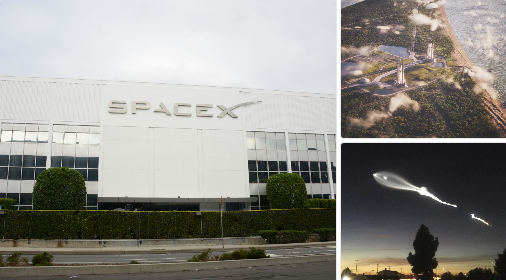
According to recent reports, SpaceX plans to go public in mid-to-late 2026, targeting a jaw-dropping valuation of around US $1.5 trillion.
The company expects to raise well over $30 billion — potentially making this the largest IPO in history.
🚀 Why Now — What’s Driving the Surge
- The strong business performance of SpaceX’s satellite-internet arm, Starlink — along with its ongoing development of the next-generation “Starship” rocket — has boosted investor confidence.
- Recent internal share sale activity places SpaceX’s valuation at around $800 billion, reflecting investor enthusiasm and setting a foundation for a public listing.
- Reports suggest that the IPO funds might be used to expand high-ambition projects — possibly including space-based data centres and other frontier-space infrastructure.
💡 What it Would Mean — For Investors, Market & Space Industry
- If SpaceX sells even a modest 5% stake at that valuation, it could raise about $40 billion — surpassing the previous record IPO (Saudi Aramco’s 2019 listing).
- A public listing would transform SpaceX from a high-flying private firm into a globally-visible publicly traded company — opening up opportunities for retail investors (depending on regulations) and increasing transparency and scrutiny.
- For the space industry, such an IPO could spur further investments — in satellite internet, commercial space travel, defence tech, and related infrastructure — potentially accelerating the space-economy boom.
⚠️ What to Watch — Risks and Uncertainties
- The timing is tentative: though mid-to-late 2026 is the target, the IPO could slip into 2027 depending on market conditions or internal decisions.
- As with any mega-IPO, investor expectations will be sky-high. That increases pressure on SpaceX to deliver consistent performance, growth — especially from its core businesses like Starlink and rocket launches.
- Market/regulatory risks: Public companies face volatility, regulatory compliance, demand fluctuations, and may be scrutinised more intensively — space-sector volatility can be higher than traditional industries.