
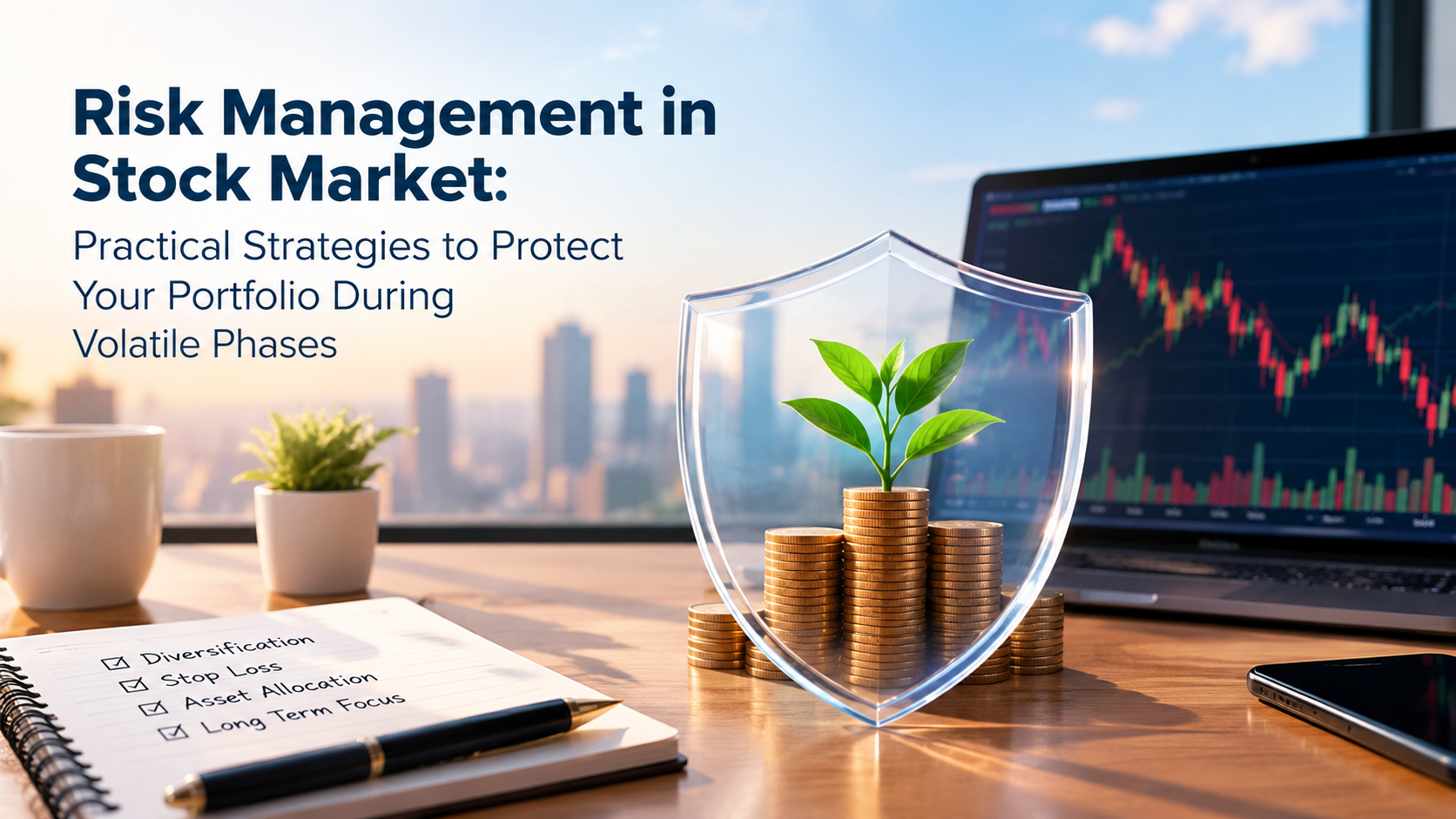

The stock market offers opportunities for wealth creation, but volatility can make investing challenging, particularly when prices fluctuate sharply due to economic changes, global developments, inflation, or investor sentiment. For investors in India, understanding how to manage financial risk is essential for protecting capital and maintaining long-term investment goals. Effective Risk Management in Stock Market practices help investors make informed decisions, reduce unnecessary losses, and navigate uncertain market conditions with greater confidence.
At Money Times, understanding market risks and adopting disciplined investment strategies can help readers build a stronger foundation for financial decision-making. Whether you are a beginner or an experienced investor, having a structured risk management plan is important during both rising and falling market phases.
Why Is Risk Management Important in the Stock Market?
Market volatility is a natural part of investing. Prices may change rapidly following economic announcements, policy decisions, geopolitical tensions, or changes in corporate performance. Without a proper risk management strategy, investors may make emotional decisions, exit investments prematurely, or expose their portfolios to excessive losses.
Risk management focuses on identifying potential risks before making investment decisions. It involves evaluating financial goals, understanding risk tolerance, diversifying investments, and determining how much capital to allocate to different asset classes.
For investors participating in the Indian financial markets, staying informed through reliable Indian Share Market News can also provide useful context about market movements. However, news should support a well-planned investment strategy rather than encourage impulsive buying or selling.
1. Diversify Your Investment Portfolio
Diversification is one of the most practical ways to reduce portfolio risk. Investing all your money in a single company, sector, or asset class can increase exposure to specific market developments. A diversified portfolio spreads investments across different categories, helping reduce dependence on any single investment.
Indian investors can consider an appropriate combination of equities, debt instruments, mutual funds, and other suitable asset classes based on their financial objectives and risk tolerance.
For example, investors exploring Mutual Fund Investment India may evaluate diversified mutual fund categories to understand how professional portfolio management and exposure to multiple securities fit into their investment plans. However, diversification does not eliminate market risk or guarantee returns.
2. Set Stop-Loss Levels and Define Your Risk Limits
A stop-loss is an order designed to limit potential losses when an investment reaches a predetermined price. It can help traders follow a disciplined exit strategy instead of holding a declining position because of emotional attachment or unrealistic recovery expectations.
Before entering a trade, determine the acceptable loss based on your overall capital, investment horizon, and personal risk tolerance. Avoid allocating an excessive portion of your portfolio to a single trade.
Long-term investors may use different risk management methods, such as periodically reviewing investment fundamentals, maintaining asset allocation targets, and rebalancing their portfolios. The appropriate approach depends on whether the objective is short-term trading or long-term wealth creation.
3. Understand Technical and Fundamental Analysis
Making informed investment decisions requires more than observing daily price movements. Two commonly used approaches are technical and fundamental analysis.
Technical Analysis Basics involve studying price charts, trading volumes, trends, and indicators to understand potential market behaviour. Traders may use these tools to identify entry and exit levels, assess momentum, and establish risk limits. However, technical indicators cannot predict future prices with certainty.
A Fundamental Analysis Guide focuses on evaluating financial performance, business stability, revenue growth, profitability, debt levels, and broader economic conditions. This approach can help investors assess whether an investment aligns with their financial objectives and long-term expectations.
Combining both approaches, where appropriate, can provide a broader perspective. Investors should also understand the limitations of each method and avoid treating past performance as a guarantee of future returns.
4. Avoid Emotional Decisions During Market Volatility
Fear and greed can influence investment decisions, particularly during sharp market corrections or sudden rallies. Selling everything during a temporary decline or investing aggressively after a rapid price increase can undermine a carefully planned strategy.
Instead, establish clear investment objectives and review decisions against those objectives. Avoid relying entirely on social media recommendations, rumours, or unverified market predictions.
Investors searching online for the Best Stocks to Buy Today should evaluate their financial situation, investment horizon, and risk capacity before acting on market information. Similarly, identifying the Best Stocks for Long Term requires research into business quality, financial health, valuation, and future prospects rather than simply following popular market trends.
5. Maintain an Emergency Fund and Review Your Portfolio
An emergency fund can help prevent investors from selling investments at unfavourable prices to cover unexpected expenses. Ideally, maintain sufficient accessible savings for essential expenses before committing surplus money to higher-risk investments.
Review your portfolio periodically to check whether your asset allocation still matches your goals. Rebalancing may help restore the intended allocation when market movements cause certain investments to become disproportionately large.
Investors should also consider investment costs, taxes, liquidity requirements, and their ability to withstand temporary losses. These factors are particularly important when planning for major financial goals.
Conclusion:
Effective Risk Management in Stock Market investing is about controlling exposure to risk, maintaining discipline, and making decisions based on research rather than emotions. Diversification, stop-loss planning, fundamental and technical analysis, emergency savings, and regular portfolio reviews can help investors navigate volatile market conditions more responsibly.
For readers of Money Times, staying informed through credible financial education and Indian Share Market News can support better decision-making in India’s evolving investment landscape. Ultimately, successful investing is not just about finding opportunities for returns; it is also about understanding potential losses, protecting financial stability, and following a strategy aligned with long-term goals.
Note: This article is for educational purposes only and does not constitute investment advice. Market investments are subject to risk. Consult a SEBI-registered investment adviser before making investment decisions.
Click here to know more about “Mutual Fund Investment India: 2026 Trends Changing How Retail Investors Build Wealth.“


Leave A Comment